Hey guys, welcome to Keeping It Natch. This is where I help you eliminate toxins from your environment.
Note: This post contains affiliate links, meaning I will make a small commission if you order products through them.
Back in December, I posted a tutorial on how to make DIY non-toxic wax air fresheners. And I actually gave those away to my family as Christmas gifts. Since then, I’ve really been committed to finding non-toxic options to my everyday products, whether it’s food, household products or beauty items.
This process has really highlighted a business practice that I like to refer to as clean washing. And that’s when brands use deceptive branding and marketing practices to make their products appear to be safe and natural when in reality they contain harmful ingredients. It’s similar to greenwashing, which is a tactic brands may use to lead consumers to believe that products are sustainably sourced and not harmful to the environment.
Just a few years ago, Simon Kutcher shared a global sustainability study that revealed that 66% of global consumers rank sustainability in their top five considerations when making a purchase decision. Data shows that many consumers today are willing to pay more for products that they know have a lower environmental impact. And that’s great and all, but what about the products that are not only bad for the earth, but bad for human health? I’m talking about hormone disruptors and cancer-causing agents.
One Seed Perfumes addressed clean washing on its blog. It said clean is an evolved cultural concept that suggests a product is less harmful than a competitor product and healthier for your body and the planet. Clean suggests there is a standard, but the term clean is actually subjective. “Clean” is a marketing tactic and not a defined standard.
A clean beauty market analysis report by GrandView Research says the global clean beauty market size was estimated at 8.25 billion in 2023 and is projected to grow at a compound annual growth rate, or CAGR, of 14.8% from 2024 to 2030. The market growth is driven by increasing consumer concerns about the safety of cosmetic products, environmental impact and potentially harmful ingredients in beauty and personal care products.
As consumers demand cleaner, more natural products, companies are shifting towards clean beauty. So, what this data tells us is that there’s big money to be made in the clean product space. And that means companies have every reason to make their products appear clean and non-toxic, even if they’re bending the truth.
So today, I want to go over a few products that you may think are perfectly safe based on their branding, but you may be surprised to learn what’s hiding behind the label. And I’m also going to give you authentically clean or lowtox alternatives that will be linked down below. So let’s get into it.
🚨 Beware of Hempz Smoothing Herbal Body Moisturizer
First, I’d like to talk about Hempz because they have a leaf on their logo. So your brain’s going to want to assume this is a good product. But most of their products are not clean. (Except it looks like here that the Hemp’s Herbal Sugar Scrub has a 79 out of 100 Yuka rating. So, that’s pretty good).
But let’s talk about some of the products that I have purchased. And the first one is the Smoothing Herbal Body Moisturizer. It has a poor rating, 37 out of 100 on Yuka. The first ingredient is phenoxyethanol. It poses a moderate risk as a potential allergen, an irritant, and a potential endocrine disruptor as well as a pollutant. It’s used in cosmetics to prevent the growth of microorganisms.
The endocrine disrupting qualities of this Hempz product is really the thing that will land it in the trash. Endocrine disruptors affect your hormones, which is not good because your body needs to be able to regulate your hormones without interruption to function optimally.
According to the National Institute of Environmental Health Sciences, endocrine disruptors are natural or man-made chemicals that may mimic or interfere with the body’s hormones, known as the endocrine system. These chemicals are linked with many health problems in both wildlife and people.
I mean, this is the stuff they really should teach you in high school. I don’t remember learning this in health class, but this information —this knowledge — could impact your purchasing decisions for the rest of your life if you know what to look for.
Now, let’s take a look at the website because you can really see more ways that Hempz goes above and beyond to create this illusion of a truly clean product. But yet, notice on the label: You will never see 100% natural.
Now, it plays up that it smells like jasmine, ripe fig and tea roses. You know, making it appear more botanical. It’s THC free, gluten-free, cruelty-free, vegan and paraben-free. But this is what I would call a lie of omission where you just kind of don’t tell the full truth, because this product has an endocrine disruptor as an ingredient that’s potentially throwing off your whole system.
Then, it really touts the 100% pure hemp seed oil, which is great. I mean, there has been a renaissance in hemp innovation in this country since the farm bill passed several years back. And there are plenty of small businesses out there making truly clean, organic, 100% natural hemp-based products. So, seek out those small businesses. Do your research. Do your due diligence.
It’s obvious Hempz has a big marketing budget and their products are popular. They’re really preying on people who have a special interest in the plant and who have a special interest in a lowtox lifestyle, but that’s not really what they’re delivering. And it looks like they’ve also come out with a pet line. But you know, if you wouldn’t trust these products on yourself, are you really going to expose your furry best friend to the hemp’s pet line?
🚨 Phenoxyethanol’s Toxic Effects
Let’s go back into the Yuka app and learn more about phenoxyethanol so you can have a full understanding of the impact it actually has on your system.
It tells us that daily use of multiple cosmetics containing this ingredient, such as sunscreens, could potentially lead to exceeding a 1% threshold, which is recommended by the SCCS, the Scientific Committee on Consumer Safety.
But wait, there is more bad news. Because this ingredient is also known to potentially trigger allergic reactions and repeated exposure may cause developmental toxicity, adverse effects on the blood, liver, and fertility. Also, it can cause severe eye damage if it comes into direct contact with the eyes.
So, you know, it’s just really not worth it to use a product like this.
From an environmental standpoint, its manufacturing process is highly polluting due to significant energy consumption and for this reason it is prohibited by certain organic certifications such as some in France and the rest are just low risk for some allergens.
I was also catfished by the Hemp’s Glow Getter body moisturizer. It has a 26 rating out of 100 by Yucka. This product also contains phenoxyethanol (the hormone-disrupting agent).
✅ Safer Alternatives to Hempz
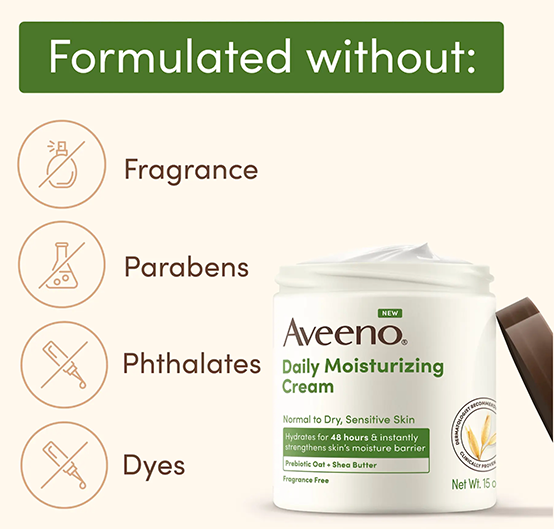
If you are looking for a better alternative, I would recommend the Aveeno daily moisturizing cream. It has a 100 out of 100 rating. Absolutely nothing dangerous there.
Now, the same cannot be said for other Aveeno products because the daily moisturizing lotion, for example has a 47 out of 100 Yuka score and contains a potential carcinogen and could also be considered a pollutant.
One of the things I like to do is to put a good natural essential oil into body creams that are unscented. And one of the ones I’ve really fallen in love with recently is by a company called Earthy Enchantments. They make a jasmine and bergamot essential oil, and it smells so good. So I like to put that in my unscented body creams to liven them up without compromising its cleanliness.
It appears, according to Yuka, that Aveeno’s body washes are safe, as well as their daily moisturizing facial cleanser. So, you don’t always know which products are safe or dangerous based on brand — it’s not a one-size-fits-all. A brand could have some toxic products, but then some that actually are clean. So, that’s why it’s just important to vet them one by one.
🚨 Beware of Argan Oil from Cream of Nature
And then we have this argan oil from Cream of Nature. And it’s products like this that really tick me off because, you know, it’s it says Cream of Nature.
And this is creamy oil moisturizing hair lotion. And the label says that it restores moisture, softens, and adds exotic shine. And the label even calls out that there is no prolatum, paraffin, and drying alcohol. But what it doesn’t tell you is that there’s phenoxyethanol.
The scientific committee on consumer safety considers its use in styling sprays and sun protection dsprays to be problematic as it can lead to exposure above the value considered to be safe. However, the SECS considers cyclopentane safe for use in other cosmetic products at the reported concentration. Now, according to the same studies, it may also have neurotoxic effects, i.e. It may disrupt the proper functioning of the nervous system.
You know — no big deal. Just a little nervous system disruption. Nothing to see here.
The Cleveland Clinic tells us your nervous system is your body’s command center. It’s made up of your brain, spinal cord, and nerves. Your nervous system works by sending messages or electrical signals between your brain and all the other parts of your body. These signals tell you to breathe, move, speak and see.
For example, your nervous system keeps track of what’s going on inside and outside of your body and decides how to respond to any situation you’re in. Your nervous system regulates complicated processes like thoughts and memory. It also plays an essential role in the things your body does without thinking like blinking, sweating, and blushing.
So, do you really want to risk having any part of your nervous system altered just because you want to use this hair cream? Like, no.
🚨 Beware of T.G.I.N. Miracle Repair Protective Leave-In Conditioner
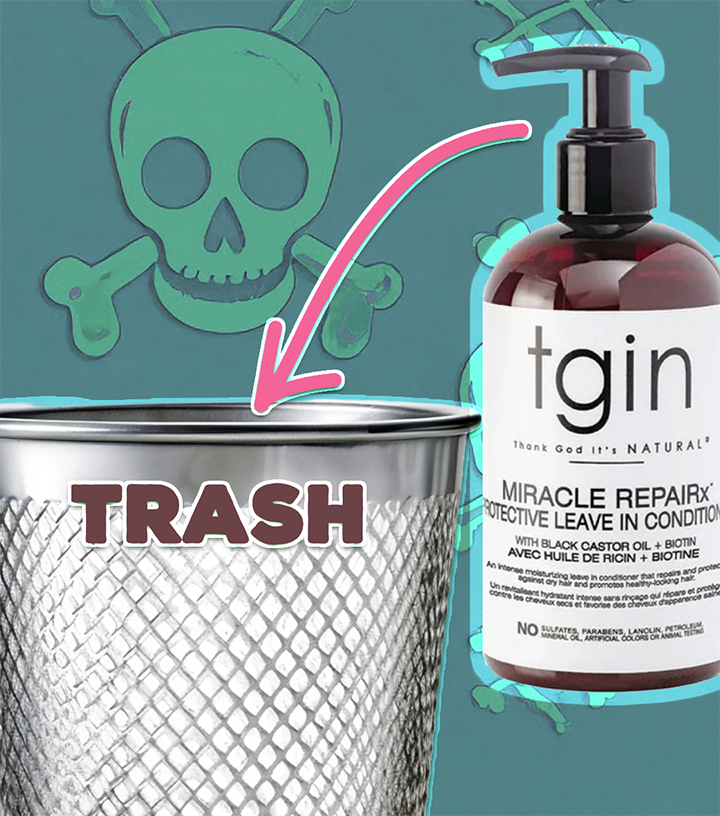
So, the next one is the TG I N Miracle Repair Protective Leave-In Conditioner. The label even goes so far as to display the trademarked Miracle Repair X with an X looking like a “Rx,” like a prescription. So you’re automatically thinking this is safe, almost like it’s a clinical solution.
TGIN actually stands for “thank god it’s natural.” These types of products really tick me off. Of course, it advertises no sulfates, parabens, lenoline, petroleum, mineral oil, artificial colors, or animal testing. So, you would look at this and you’d say, “Oh, this is a great product.”
But the devil is in the details because what it doesn’t tell you is that it has the foilenol, which is a potential allergen, an irritant, and again, a potential endocrine disruptor, as well as a pollutant.
So, I was really disturbed when I went to the TGIN website because when you start to look a little deeper into the company and you go to their story and their mission, there’s nothing on here about being committed to providing safe and clean products. One of the co-founders, Christia Donaldson — I get the impression that she passed away of breast cancer because she wrote a book called This is Only a Test: What Breast Cancer Taught Me: About Faith, Love, Hair, and Business. And you see that she was diagnosed with breast cancer in 2015.
During her treatment, she learned that having money could make the difference between living and dying when it came to treating this condition. In her observation, few organizations existed that provided support and social services to help women with transportation, child care, parking, or seeking disability leave from their place of employment. But, you know, you just don’t see anything on here about their commitment to just making safe, clean products. And this is shocking because this woman actually had cancer.
So, the fact that they promote and sell clean washed products that have dangerous ingredients to the human body is really shocking.
CEO Aerys Singleton serves as the dynamic CEO at the helm of Thank God It’s Natural, one of the leading textured hair care brands sold in retailers such as Target, Walmart, Ulta Beauty, Sally Beauty, Walgreens, CVS, and numerous other national and international outlets as well as online platforms.
You see some about her background, but it’s just there’s nothing here about anything having to do with their mission to provide healthy products. So, I turn to the mission page. It says, “Our mission is to redefine beauty by cultivating a community that empowers women to be the best versions of themselves.”
Their whole has nothing to do with providing natural products.
Their website states, “We constantly strive to improve our products and ourselves and take pride in what we do. We do things to the highest possible standards.”
But do they really? Cuz I’m seeing toxins in their products. T
Overall, Yuka gives this product a 43 out of 100 rating, which it considers to be poor. So, there are definitely some better products you could get to replace both of these toxic ones.
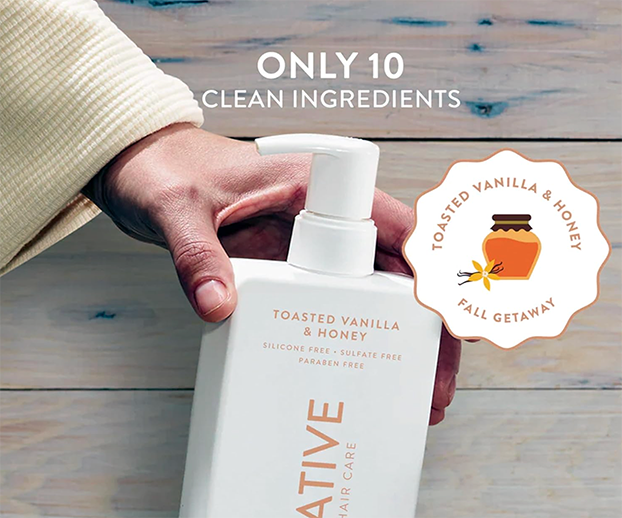
✅ Safer Hair Conditioning Products
Opt for the highly rated clean conditioner products from Native and the Miracle Moisture Boost Conditioner by Pantene, whose 79 out of 100 rating pleasantly surprised me.
Personally, I would have just assumed that a brand as mainstream as Pantene probably had all toxic products, but it’s a good alternative to these other clean washed products.
🚨 Beware of Bert’s Bees 100% Natural Moisturizing Lipstick
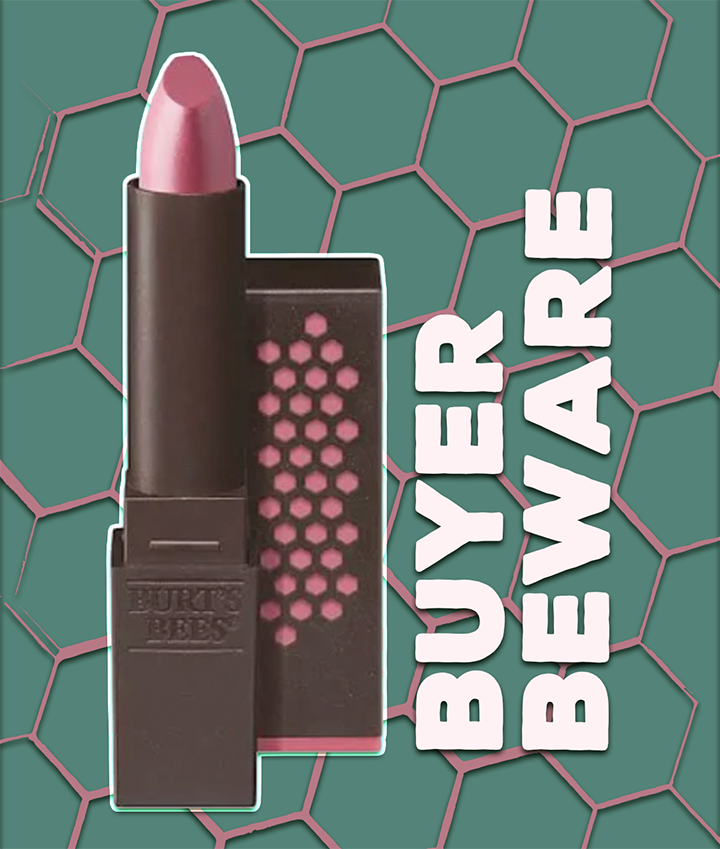
Moving into lip care now, we’re going to start with Burt’s Bee’s 100% natural moisturizing lipstick. It has a 45 out of 100 Yuka rating, which is considered poor. It contains titanium dioxide, and I thought it had a really cute case, and it really does feel soft and creamy on your lips. And then, of course, you see it’s by Burts Bees. So you think, “Oh, they’re they’re a natural company. They use, bee byproducts for goodness sake!”
So, I was really disappointed to see that it contains this potential carcinogen. Yuka says that titanium dioxide is used as a UV filter in sunscreens and as a coloring agent in cosmetics, which may expose the user to skin penetration, inhalation for sprays and aerosols or ingestion for toothpaste, lipsticks and balms.
The problem here is that orally it is suspected to be carcinogenic and it has been banned in the European Union as a food additive. It could thus pose a risk in toothpaste, lip balms, and lipsticks. Whenever I see that the European Union has done something, I feel pretty confident in their decisions because unlike here in the US, it just seems like they actually care about not poisoning their citizens. So, to me, the fact that the EU has banned titanium dioxide gives me confidence that it’s toxic.
So, watch out for the titanium dioxide in your beauty products.
However, some of Burt’s Bees’ products are good quality, like the Burts Bees liquid lipstick. It has a 72 out of 100 rating on Yuka.
With lipsticks, you want to be super careful because it’s going on your lips and you’re licking your lips throughout the day and the products are being absorbed orally and getting in your system. And there’s just no reason for it because there are safer products on the market.
✅ Safer Alternatives to Burt’s Bees Lipstick
For example, this Luxe Lip Oil Trio by Billion Dollar Beauty that has an 86 out of 100 rating, which is really excellent.
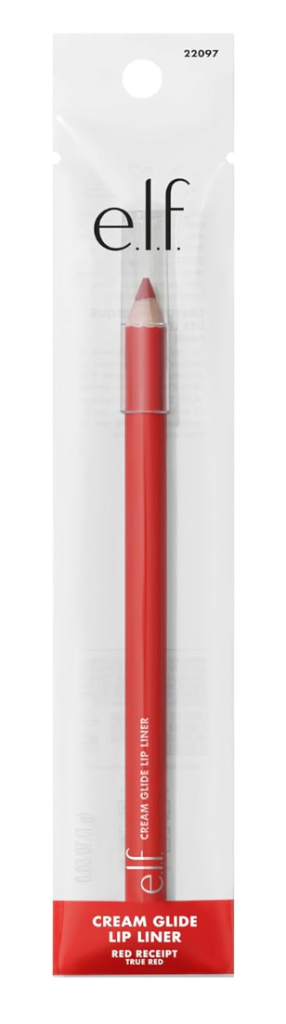
There’s also e.l.f.’s cream glide lip liner in red receipt. Ooh, that looks like a really fun choice. And it has a 93 out of 100 Yuka rating.
That’s All for Now
In this post, we’ve covered lip care, hair care, and skincare. I hope this article has helped you to just be a more conscious consumer of products and be aware of the impurities that go into them so that you can eliminate as many toxins from your environment as possible. And you’re going to be a happier, healthier person as a result.
Don’t forget to subscribe to Keeping it Natch on YouTube!